

Don’t “Let Them,” Sue Them
Byron Allen built a billion-dollar media company by suing some of the biggest corporations in America. His critics call it pressure. He calls it accountability. Either way, it worked.

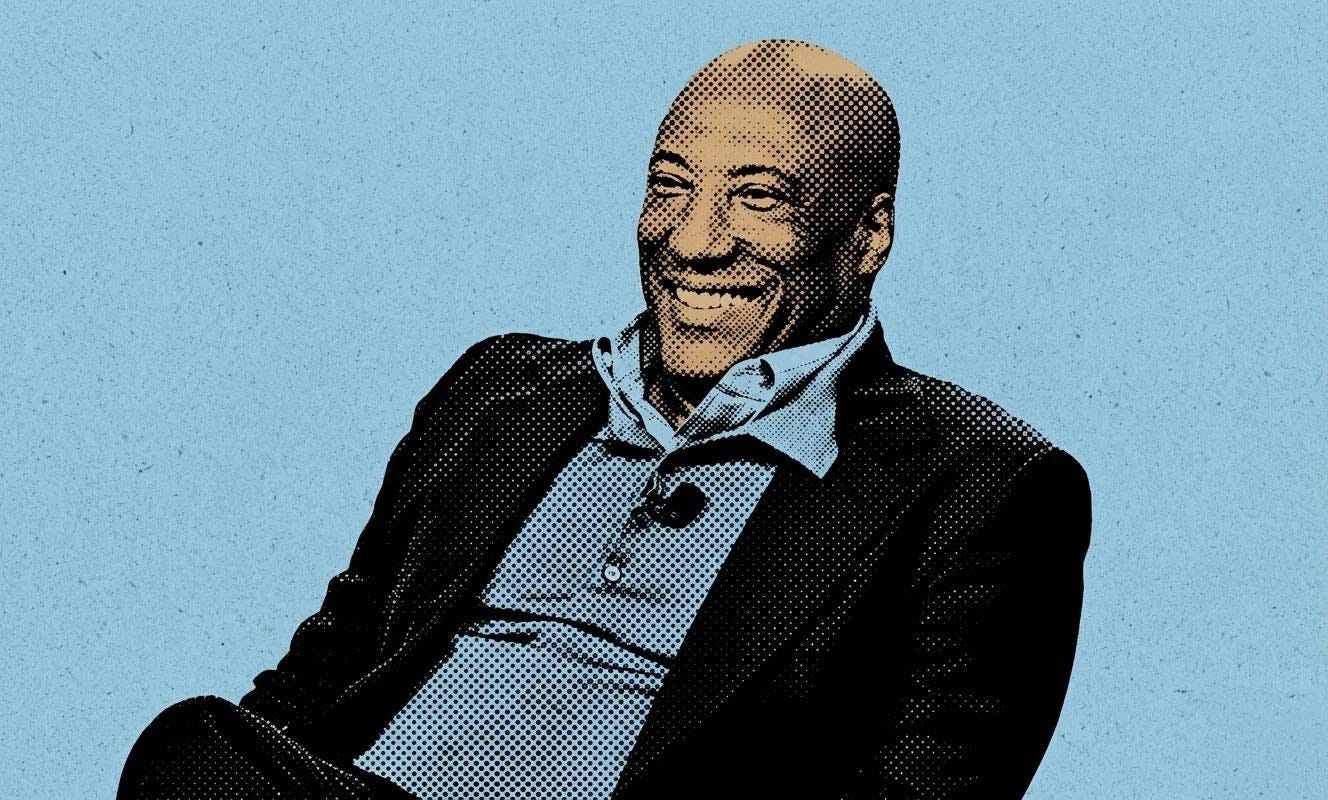
Byron Allen figured out the ultimate cheat code to corporate America’s diversity problem. When the gatekeepers refuse to buy his ads, carry his channels, or treat his media empire like a real business, he doesn’t write a strongly worded op-ed. He doesn’t ask for a meeting. He sues them.
For the last ten years, Allen has been dragging giants—Comcast, AT&T, DirecTV, Charter, McDonald’s—into the light. The choreography is always the same: Allen accuses them of locking Black-owned media out of the money room. The corporation clutches its pearls, denies everything, and insists it’s just business. Then the fight gets very public, very expensive, and deeply embarrassing. Does he win every time? No. But eventually, a check clears. A carriage deal appears. The math changes.
It is a stroke of dark, uncomfortable genius. Allen has taken civil rights law—usually a fragile shield—and turned it into a battering ram to force access into markets that would otherwise never let him in. His critics whisper that it’s just legal extortion in a racial justice trench coat. Allen calls it accountability. Either way, it’s the most fascinating growth strategy in Hollywood.
The playbook was written in the green rooms of his childhood. Born in Detroit in 1961, Allen’s earliest memories were of the blue-collar grind. But when his parents split, his mother moved them to L.A. and hustled her way up to becoming a publicist at NBC Studios in Burbank. Suddenly, television wasn’t just a box in the living room; it was a physical space. Little Byron watched Johnny Carson and Redd Foxx go to work. He realized early on that the magic wasn’t in the performance. The people on camera were labor; the owners were out of sight.
By 18, he was the youngest comic ever to do The Tonight Show, which landed him a sweet gig co-hosting NBC’s massively popular Real People. He had notoriety, but that was a trap. “It was not show business. It was business show,” he likes to say. The talent gets the applause, but the owner gets the equity. He didn’t want to spend his life as talent. He wanted more.

So, in 1993, he walked away from the applause and set up shop at his dining-room table. He started Entertainment Studios with a brilliantly cheap premise: he took free, five-minute celebrity press junkets and repackaged them into a syndicated hour, Entertainers with Byron Allen. He gave it to local stations for free, as long as he got half the ad revenue. It was a grind. He nearly lost his house. But while the rest of the industry was busy chasing the next prestige hit, Allen was quietly hoarding libraries of content, rights, and pure, unadulterated distribution.
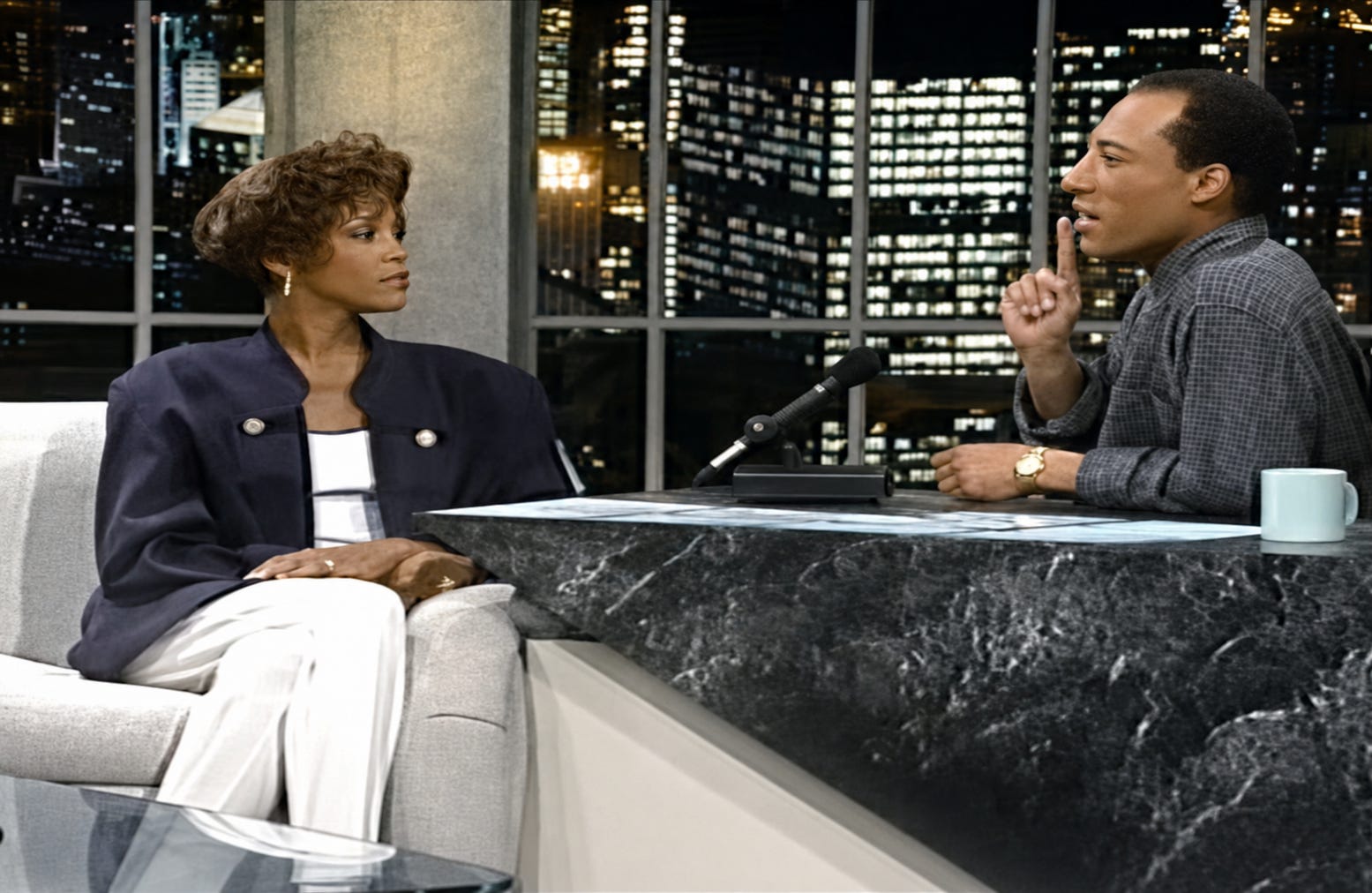
How do you go from a weekend syndication hustle to owning 24/7 cable networks? You hoard your IP and wait for a tech shift. By 2009, the industry was sweating the massive transition to high-definition television. Cable providers were suddenly desperate for cheap HD content to fill their shiny new bandwidth. Allen, who had obsessively shot his lifestyle and interview shows in HD long before anyone else cared, suddenly held all the cards. He took his massive backlog of content, chopped it up, and launched six niche 24-hour HD networks—Comedy.TV, Pets.TV, Recipe.TV—all at the same time. It was the ultimate media upcycle. He wasn’t just a guy who owned a syndicated show anymore; he was an owner of networks.
But there is always a ceiling. By the 2010s, cable operators had consolidated into a few massive gatekeepers. If Comcast or AT&T didn’t want you, you simply didn’t exist. For Black media owners, the issue wasn’t making the content; it was getting it into the pipes. Allen looked at the board, saw that Black ownership in media distribution was practically zero, and called their bluff. They said the market was neutral. He knew better.
So in 2015, he sued AT&T and DirecTV for racial discrimination. It didn’t go to trial; DirecTV just magically agreed to pick up his channels. No one admitted anything, but a relationship materialized out of thin air. Access born of force.
He took the exact same energy to Comcast. But he didn’t just file a standard, HR-style discrimination grievance. He used the Civil Rights Act of 1866—specifically Section 1981, a post-Civil War statute designed to guarantee formerly enslaved Black Americans the right to make and enforce business contracts. In a stroke of brilliant historical irony, Allen used a Reconstruction-era law to force modern telecom monopolies to pay him carriage fees.
Comcast fought back, dragging it all the way to the Supreme Court in 2020. Allen technically lost—the Court made it much harder to prove discrimination—but commercially? He won. Comcast settled shortly after and picked up his networks. The exact same thing happened with Charter in 2021. He didn’t always win the legal argument, but he changed the corporate behavior every single time.
But carriage alone doesn’t build a broadcast empire If cable companies put his networks in the pipeline, but Madison Avenue’s major ad agencies refused to buy commercial time on them, his channels would starve on the vine. To survive, he had to go after the ad budgets directly.
That realization triggered the next phase of the war. Last summer, McDonald’s quietly settled a $10 billion lawsuit with Allen’s companies. He’d basically accused the fast-food behemoth of ghosting Black-owned media when it came to ad budgets. McDonald’s, of course, denied any wrongdoing. The settlement was confidential, of course, but it dodged a messy federal trial. For McDonald’s, it was a write-off. For Allen, it was exactly the point: turn a closed door into a massive liability, and watch it swing open. Corporate America loves the aesthetics of diversity—the heritage months, the glossy reports. Allen’s lawsuits strip all that away and ask the only question that matters: Who is actually getting paid?
And it worked. He bought the Weather Channel for $300 million in 2018. Now he owned a legacy brand with national reach. High on that success, Allen went on a massive, debt-fueled shopping spree. Between 2019 and 2022, he dropped more than $1 billion snapping up local Big Four (ABC, NBC, CBS, Fox) television affiliates across the country. He went from a teenager reading Carson’s cue cards to the guy owning the broadcast towers.
But infrastructure requires capital, and capital creates debt. By the mid-2020s, that billion-dollar debt load created its own agonizing pressure. In June 2025, facing the realities of a declining linear television market, Allen Media Group hired Moelis & Co. to seek buyers for its 28 local TV stations. By May 2026, they had closed on station transactions totaling $171 million with Gray Media. Allen faced the exact same pressures confronting all media owners today. The market forces he had so brilliantly exploited were now narrowing around him.
Still, his aggressive legal playbook remains his defining legacy. He turned grievance into process, process into leverage, and leverage into deals.
His career exposes a practical asymmetry in American business: the people denied access are often the ones expected to finance the lawsuit, endure the delay, and absorb the reputational fallout to prove it. Justice favors those with money, stamina, and tolerance for years of friction. It’s a strategy that is almost impossible for an ordinary entrepreneur to replicate.
Yet, Allen’s refusal to be dismissed has made his company a fascinating test case. He forced movement from major corporations without always proving his claims in court. He demonstrated that large systems are not immovable, and that untouchable companies can be pressured if someone possesses enough legal imagination and appetite for conflict.
The old success story promised that excellence would open doors. Allen’s career proposes a colder reality: sometimes doors open only when keeping them closed becomes too expensive.
Donovan X. Ramsey’s writing explores identity, culture, and power in America. He is the author of When Crack Was King: A People’s History of a Misunderstood Era and Had Happened, a weekly newsletter. His reporting and commentary have appeared in The Atlantic, GQ, The New York Times, and beyond.
I have always been fascinated with how Byron Allen manages to get wealthier and wealthier yet barely say or write a word on social media. Thanks for this essay.