

From the Border to the Block
A white woman is dead. The mandate is expanding. The machinery of control that was once confined to the margins has finally arrived at the center.

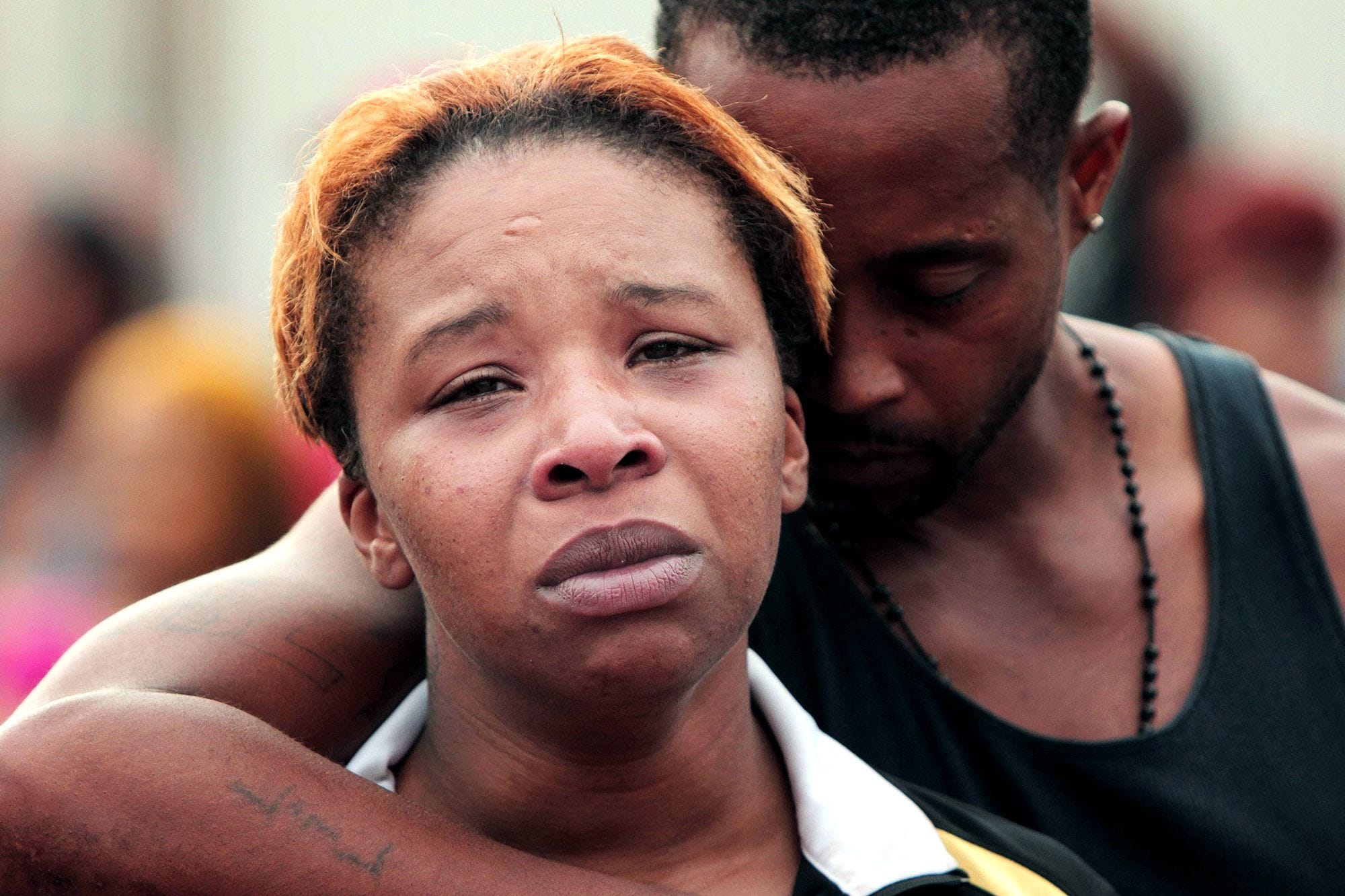
An ICE agent shot and killed Renee Nicole Good in Minneapolis. Thirty-seven years old. White. Widowed. Three kids. She wasn’t there to cause trouble; she was a legal observer, monitoring the scene after more than 2,000 federal agents flooded the city. When the situation escalated, she tried to leave in her car. Officials called her a “domestic terrorist,” claiming she tried to run someone over. But the video tells the truth: she was pivoting away. She didn’t accelerate until after the shots were fired. The agent walked off. Good didn’t.
Another name. Another story they tried to write over a cooling body.
Most folks will merely say: That’s tragic. And it is. But if you’ve been paying attention, you know it’s also something else. It’s a signal. A warning. The kind we’ve been giving for years while people brushed past it like background noise.
Remember during the Black Lives Matter years when we kept saying American policing didn’t start as protection, but as pursuit? Slave patrols. Catching, containing, controlling. Not safety—control. Not service—capture. The point wasn’t that today’s cops are riding horses with whips. The point was that a system built for domination does not magically become neutral just because you change the uniform. But every time we said it, folks hit us with that same shrug: So what? That was a long time ago.
Now look at what ICE is becoming. It was supposed to be about borders and detention centers. Now it’s in cities. In neighborhoods. Moving when the president says move. Not just enforcing law, but occupying space. Watching. Stopping. What we’re seeing take shape is a federal police force that answers up, not out. Big power. Thin oversight.
If you know how this country moves, you know what comes next. Not some movie-scene takeover. Procedure. Paperwork. Policy updates. The kind of stuff that sounds boring until it becomes lethal. The reach widens. First migrants. Then activists. Then folks who just happen to be in the wrong place at the wrong time. Borders turn into blocks. Streets. Doorsteps. Warrants turn into forms. “Exceptional circumstances” turn into everyday business. Oversight gets quieter. Politics gets louder. And suddenly, the thing that once felt unthinkable feels normal.
They’re not hiding it, either. They’re announcing it.
ICE is preparing to put more than 10,000 new agents on the streets, armed with data harvested by private contractors. JD Vance went on Fox News promising agents would go “door to door” for the largest mass deportation in history. They’ve doubled the size of the agency in a year. The budget is set to triple. They’re recruiting like it’s a war—minimal training, $100 million in ads targeted at people who like guns, tactical gear, UFC fights, and “patriotic” podcasts. That isn’t bureaucracy. It’s militarization.
And it’s not just about immigration enforcement anymore. They’ve started talking openly about stripping citizenship—200 naturalized citizens a month, maybe more. Proposing the denaturalization of political enemies. DHS circulating fantasies about “100 million deportations.” Do the math. You don’t get to numbers like that without deciding that citizenship itself is conditional.
Meanwhile, ProPublica has already documented U.S. citizens being wrongly detained. Border Patrol officials suggest we should be ready to prove who we are on demand. In other words: the burden has flipped. The state no longer has to justify its power. You have to justify your right to exist in front of it.
And then there’s Renee Nicole Good.
This doesn’t feel new to me. Or to you, if we’re being honest. As a Black man, I’ve lived under this kind of authority my whole life. The sudden stops. The thin explanations. The way the story is written before the facts come out.
We have seen this machinery work before. We saw it with Philando Castile, where the justification was fear of a legal gun he had already disclosed. We saw it with Daunte Wright, where a fatal shot was excused as a confusion between a Taser and a Glock. We saw it with Terence Crutcher, justified by a phantom reach into a window that was actually rolled up. We saw it with Amadou Diallo, where a wallet became a gun, and with Breonna Taylor and Atatiana Jefferson, where the state claimed self-defense against the very people it had surprised in the dark.
Different lives, same mechanics: ordinary movement recast as aggression, confusion weaponized into fatal suspicion. Good’s death follows this exact procedural logic. It is not an anomaly. It is a pattern the country has, again and again, accepted as necessary.
There’s no shock here—just that familiar tiredness. The weariness of knowing what something is before the country is ready to admit it.
So now we’re at a crossroads.
Folks who didn’t care before are paying attention now. They’re scared. That creates a moment—what Derrick Bell called interest convergence. Our fight and their fear finally pointing in the same direction. Maybe this is the opening to finally break the weight that’s been on our neck.
Or maybe it’s something colder.
Maybe some of the people who ignored us for years will grab onto our language, our labor, and our organizing just long enough to get themselves out of danger. And once they’re safe again, once the pressure lifts from their own lives, they’ll go right back to treating this as a niche issue. A “somebody else” problem. Because a lot of them don’t actually hate domination. They just hate when it touches them.
That’s the part we can’t be naive about.
This isn’t about getting to say “I told you so.” That’s too small. It matters because once you see the pattern, you’re no longer innocent. History stops being trivia and starts being a map. You can see where the road goes. The only real question left is whether we care enough—together—to turn before it hardens into something permanent.
What happened to Renee Nicole Good wasn’t random. It wasn’t a glitch. It was a glimpse of what this system looks like when it’s allowed to grow without restraint.
We’ve seen this power before.
The question now is who is finally ready to see it with us—and who is just trying to survive it long enough to look away again.
Donovan X. Ramsey’s writing explores identity, culture, and power in America. He is the author of When Crack Was King: A People’s History of a Misunderstood Era and Had Happened, a weekly newsletter. His reporting and commentary have appeared in The Atlantic, GQ, The New York Times, and beyond.
“a lot of them don’t actually hate domination. They just hate when it touches them.” So sad, but very true.
They won’t be grabbing onto my organizing bc this ain’t my fight. The princess needs to save herself.